Tuesday, 8 February 2011

A brief history of textile printing

This is where I put my archaeology head on...

Ancient textiles are very rare because they only survive in certain environments (either very hot and dry or waterlogged) but enough survive that we know that people were printing on fabric in East Asia in prehistory and in Egypt from at least the 4th century BC.

http://www.touregypt.net/featurestories/fabrics.htm These are examples of early Christian textiles from Coptic Egypt (1st-2nd century AD)

Early printing was block-printing, which is attested from pre-Christian times in China, Egypt, the East-Indies and Assyria, and dyes would be used to transfer images. Dyeing and elaborate weaving was far more common, but simple patterns continued to be printed into medieval times.

New techniques in printing only appeared in the 18th century, when copperplate and cylinder printing came into use. Patterns would be carved into a plate or roller to be transfered onto fabric. Thomas Bell patented a process of roller printing in 1783 which could print 6 colours at once, but the process was out of use by the 19th century as more suitable materials were used in place of copperplate. The process was popular because it was fast and produced elegant results far more quickly than block printing, which involved carefully lining up the edges of a block.

Machines also made an impact on block printing; in 1834, Perrot of Rouen invented a mechanical block printing machine, now known as a perrotine, that sped up the process considerably. It is the only totally practical machine made for the process and as such is still used in Europe today despite roller printing and screen printing becoming more popular.
http://www.silkscreenhistory.com/vorlauf/vorlauf3.html
Screen printing is the most common form of textile printing used today but is a relatively modern invention, first patented in 1907, although there is evidence to suggest that it was in use in China in the 9th century. In the West it was first used to create wallpaper designs and other paper crafts but by the 1920s fabrics were printed as well. Rotary multicoloured screen printing was patented in the 1960s by Michael Vasilantone, making large-scale screen prints faster and more viable. Advances in computer technology have meant that artists can now make more elaborate stencils in a manner similar to a digital printer (using cyan, magenta, yellow and black to build colours).

Digital Textile Printing or direct to garment (DTG) printing is the most recent addition, and is widely used now thanks to advances in technology. Ink is transfered directly onto the garment by an inkjet printer. These can create elaborate images swiftly but are expensive to purchase and maintain, so many artists and small production houses continue to use manual methods.


More links about printing

http://textiles.indianetzone.com/1/techniques_textile_decoration.htm - processes and history
http://www.artelino.com/articles/silkscreen-printing.asp - processes
http://www.pneac.org/printprocesses/screen/ more processes
http://thetextileblog.blogspot.com/search/label/printed and here's some of what the Textile Blog have on printed works, you can see just how versatile printing is from the huge range of different styles.

Tuesday, 1 February 2011

More Photoshop!

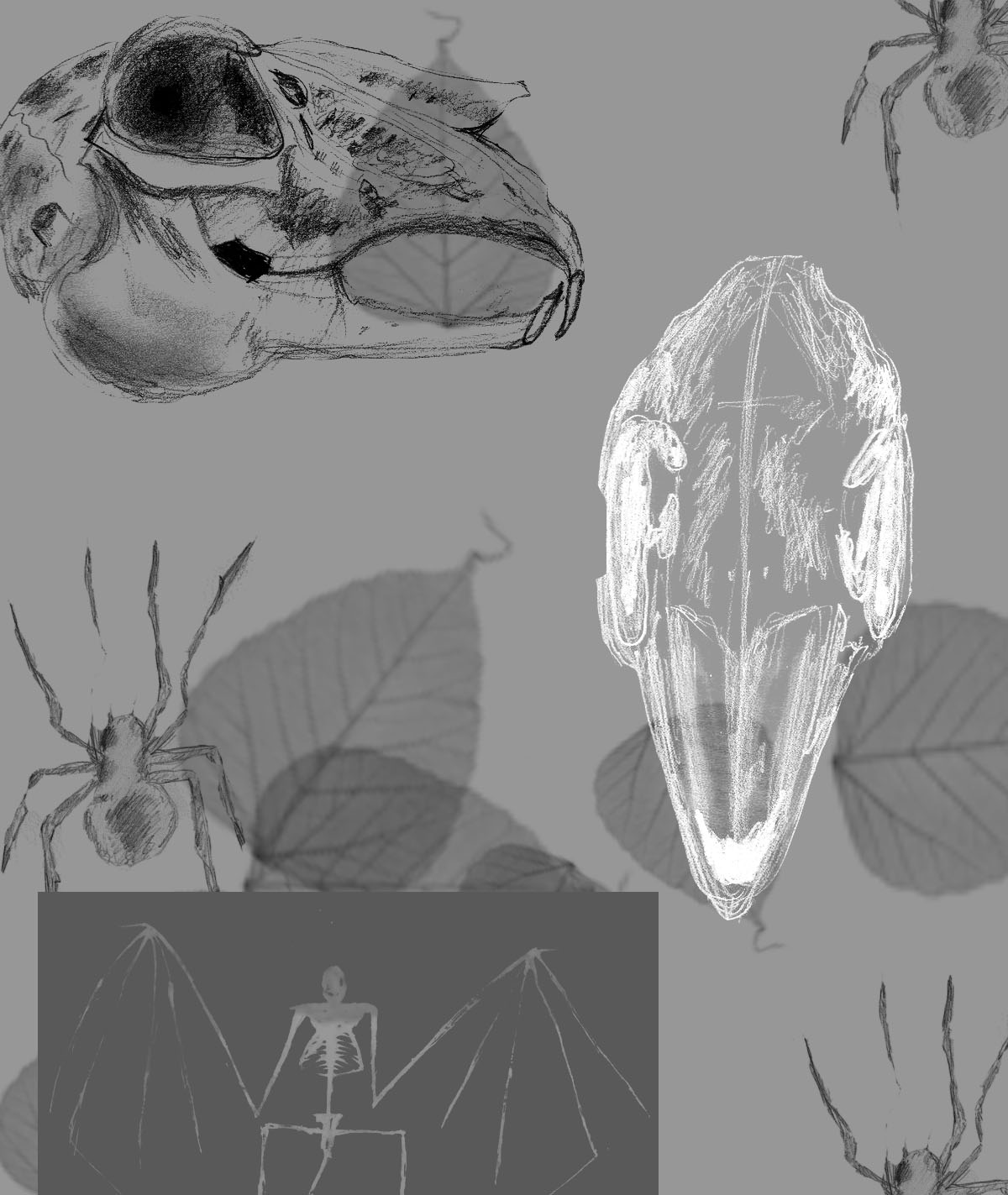
This time I've been making patterns and brushes out of drawings I scanned in.
First I made brushes by simply selecting the area of the drawing and changing the colours through the "levels" option

Then I made some pictures with those brushes


 Then I tried making some patterns with the original images. This is a half drop of a hare's skull drawn in bleach on ink
 Half drop bat skeleton
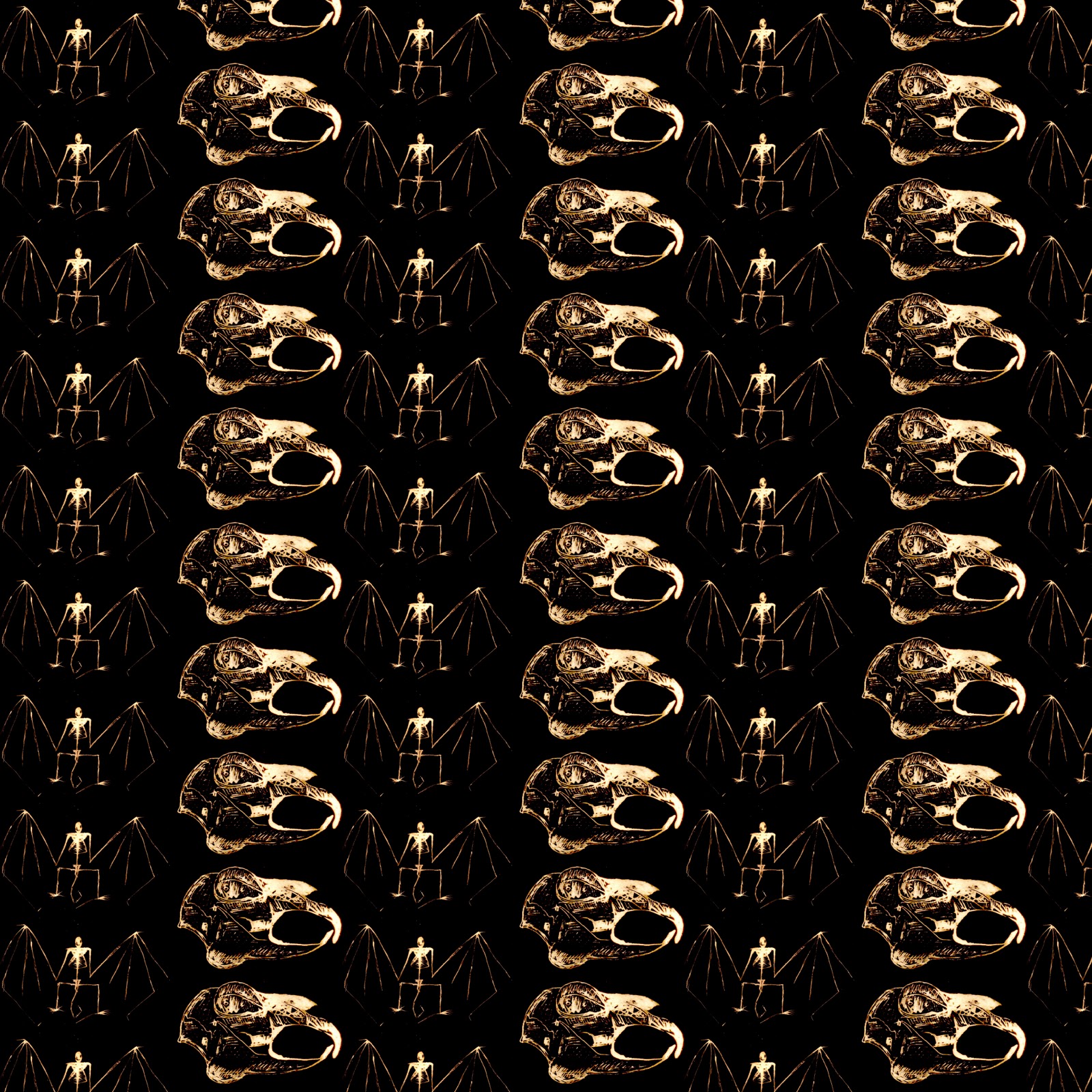
Half drop of the bat and the skull together

And finally I took an old painting and made a half drop pattern using the healing tool to merge the seams.

Photoshop Patterns

Experimenting with pattern making in photoshop.
First I created some of my own brushes
Then I made a simple block pattern with some
 Then I made a half-drop pattern using wrap-around filters


 Using colour and shape dynamics, I layered brushes to create busier and more complex patterns


Then I experimented with using the patterns to fill shapes

Monday, 31 January 2011

Yet another interesting link

This series of lesson plans looks at the relationship between art and mathematics in pattern design. With sections on traditional non-European art styles, such as Islamic patterns and Indian Mandalas, as well as famous artists for whom pattern was a key part of their style, such as Escher and Klimt. There's also a section on the history of the use of pattern in art, which goes right up from Prehistoric cave paintings right up to modern art, which is very interesting, and pretty relevant for me as I'm thinking of using Egyptian styles again.

More Mathematical Patterns: Fractals

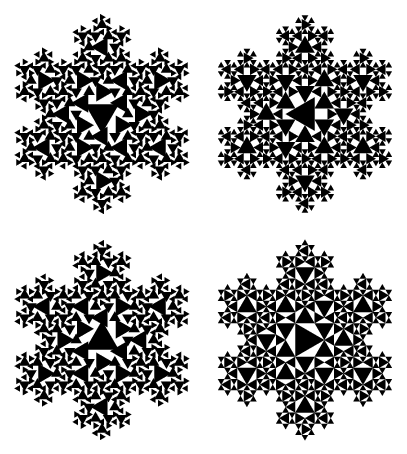
Fractals are complex, often chaotic, geometric shapes which divide into parts which are smaller-sized versions of the whole thing. In maths they are used to describe certain graphs and geometric principles, but they also make beautiful art. You can see them in nature in ferns
electrical discharges
and Romanesco broccoli, to name but a few
(images from http://www.miqel.com/fractals_math_patterns/visual-math-natural-fractals.html )

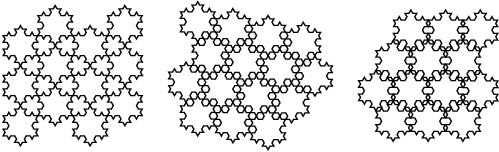
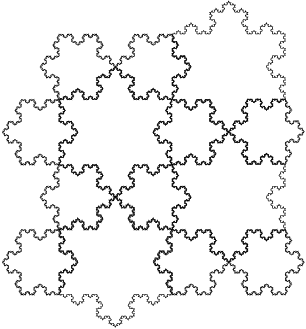
Examples llike the Koch Snowflake can be used to create beautiful tiled patterns like these from Mathworld

Another useful link

Looking at using different types of repeat to create different patterns with the same base image. This tutorial gives examples making some nifty pattern using nothing more elaborate than the letter P (images below taken from that website).
Basic block pattern
Half Drop
Reflections
Basic Rotations
And some rotations of different degrees
Rotations combined with reflections

A useful link

The Textile Blog is an excellent resource for images and thoughtful, fairly accurate articles on various famous textile designers. It's largely an art history based site, as far as I can tell, but it looks at some quite unusual subjects, such as lace design. There's lots on wallpapers, rugs, tapestries and suchlike which could be very useful for repeat pattern ideas.